std::set<Key,Compare,Allocator>::begin, std::set<Key,Compare,Allocator>::
From cppreference.com
C++
Containers library
| Sequence | ||||
|
(C++11)
|
||||
|
(C++26)
|
||||
|
(C++11)
|
||||
| Associative | ||||
| Unordered associative | ||||
|
(C++11)
|
||||
|
(C++11)
|
||||
|
(C++11)
|
||||
|
(C++11)
|
||||
| Adaptors | ||||
|
(C++23)
|
||||
|
(C++23)
|
||||
|
(C++23)
|
||||
|
(C++23)
|
||||
| Views | ||||
|
(C++20)
|
||||
|
(C++23)
|
||||
| Tables | ||||
| Iterator invalidation | ||||
| Member function table | ||||
| Non-member function table |
std::set
| Member functions | |||||||||||||||||||||||||||
| Non-member functions | |||||||||||||||||||||||||||
|
|||||||||||||||||||||||||||
| Deduction guides(C++17) | |||||||||||||||||||||||||||
iterator begin(); |
(1) | (noexcept since C++11) |
const_iterator begin() const; |
(2) | (noexcept since C++11) |
const_iterator cbegin() const noexcept; |
(3) | (since C++11) |
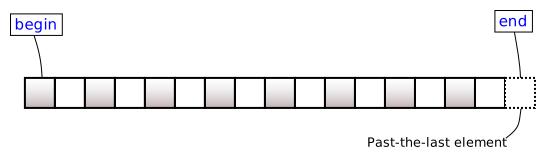
Returns an iterator to the first element of the set.
If the set is empty, the returned iterator will be equal to end().
Parameters
(none)
Return value
Iterator to the first element.
Complexity
Constant.
Notes
Because both iterator and const_iterator
libc++ backports cbegin() to C++98 mode.
Example
Run this code
#include <algorithm>
#include <iostream>
#include <set>

int main()
{
    std::set<int> set{3, 1, 4, 1, 5, 9, 2, 6, 5};
    std::for_each(set.cbegin(), set.cend(), [](int x)
    {
        std::cout << x << ' ';
    });
    std::cout << '\n';
}
Output:
1 2 3 4 5 6 9
See also
|
(C++11)
|
returns an iterator to the end (public member function) |
|
(C++11)(C++14)
|
returns an iterator to the beginning of a container or array (function template) |